
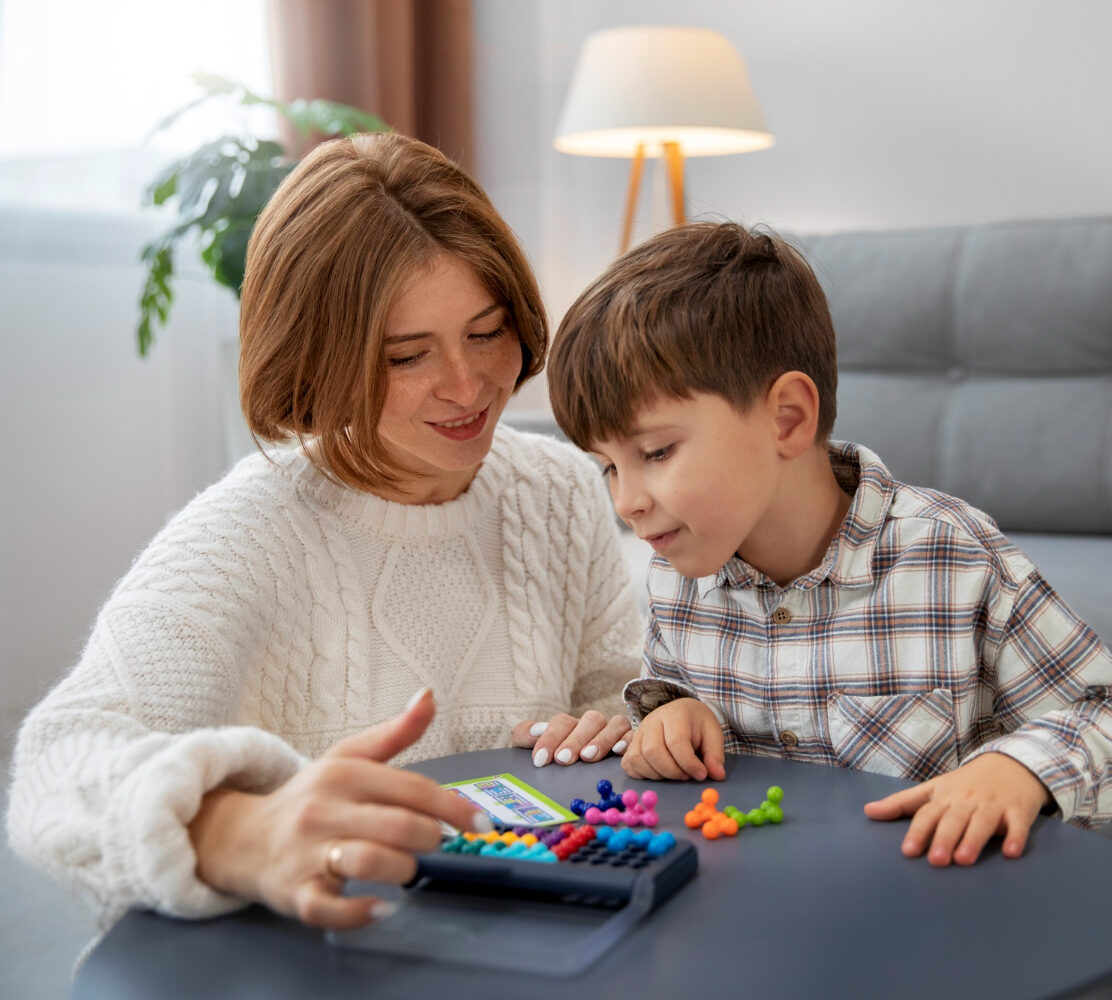
When families first explore ABA, one of the earliest questions is simple: where should it happen? For a lot of children, the answer is “right at home.” Home-based ABA brings skilled, evidence-based support into the place where your child already feels safe, where real life happens, and where new skills actually need to stick. At Golden Moon ABA, many of the Montgomery County families we serve choose our home-based ABA program for exactly these reasons.
Home isn’t the right fit for every child, and a good clinician will help you weigh the options. But for many kids, the home setting offers real advantages. Here are five of the most important, along with what the research suggests.
1. Skills Are Learned Where They’re Actually Used
A child who learns to ask for a snack in a therapy room still has to do it in their own kitchen. “Generalization” is the term for carrying a skill from one place to another, and it is one of the central challenges in autism support. A graduate research review on natural-environment teaching from Pittsburg State University describes how teaching skills inside everyday routines helps children apply them more readily across people and places. When the “classroom” is your living room, there is less of a gap to bridge.
2. Parents Become Confident, Capable Coaches
Home programs naturally pull parents and caregivers in. You see the strategies in action, ask questions in the moment, and practice between sessions. Parent involvement is so effective that parent-mediated intervention is now considered an evidence-based practice. The UC Davis MIND Institute even built a free, ABA-based parent training program (ADEPT) around this idea. The National Institute of Child Health and Human Development notes that the most effective approaches are highly structured and individualized — and at home, you are part of building that structure.
3. A Familiar Setting Lowers Stress and Boosts Learning
New rooms, new sounds, and new people can be overwhelming for a child who is sensitive to change. Starting in a familiar environment can reduce anxiety so a child has more energy for learning. The CDC notes that autism treatment can be delivered in home, health, community, or school settings, or a combination — there is no single “correct” place, and home is a fully legitimate, effective choice.
4. Therapy Targets Real Routines That Matter
Mealtimes, getting dressed, brushing teeth, transitioning to bed, sharing toys with a sibling — these are the moments families care about most, and they are hard to recreate in a clinic. A data-based case study indexed in the U.S. Department of Education’s ERIC database found that training parents in the home helped reduce challenging behavior during real mealtime routines. Home-based ABA can target the exact situations that make your day smoother.
5. Convenience Supports Consistency
Consistency is one of the biggest predictors of progress, and nothing protects consistency like removing the commute, the waiting room, and the schedule juggling. The chart below shows the typical weekly intensity ranges for ABA programs; whatever level your clinician recommends, delivering it at home makes it easier to keep every session.
What a Home-Based Week Can Look Like
Every plan is unique, but the doughnut below shows how the hours in a home program are often balanced between direct skill-building, teaching during everyday routines, and coaching for parents.
- Direct 1:1 skill-building — 55%
- Teaching during daily routines — 25%
- Parent coaching — 12%
- Planning & data review — 8%
Illustrative example from Golden Moon ABA to show how home programs are commonly structured; your child’s plan will be individualized. Learn more about our home-based ABA services.
Is Home-Based ABA Right for Your Child?
Home-based ABA shines for generalization, family involvement, comfort, real-life routines, and consistency. Some children still benefit from a clinic, school, or blended approach, and the best plan is the one matched to your child’s goals. If you would like help thinking it through, our team is glad to talk. You can explore home-based ABA at Golden Moon ABA or reach out anytime with questions.
Frequently Asked Questions
Does my house need to be “perfect” for home-based ABA?
Not at all. Your therapist works with the space you have. A small, low-distraction area and your child’s everyday routines are plenty to get started.
Do I have to be present during every session?
Plans vary, but family involvement is one of the biggest advantages of home-based ABA, so caregivers are usually involved at least part of the time. Parent coaching helps the skills continue between sessions.
Will my child still learn to handle new environments?
Yes. A good home program gradually builds toward community outings, school settings, and other environments so skills generalize beyond the house.
Is home-based ABA as effective as clinic-based ABA?
Both can be highly effective; what matters most is quality, consistency, and fit. For children who struggle with generalization or new settings, the home environment often offers a real head start.
How do we get started in Montgomery County?
The simplest first step is a conversation. Visit Golden Moon ABA to learn about our programs, and our team can walk you through next steps and what your plan might look like.
This article is for general education and is not a substitute for professional medical advice, diagnosis, or treatment.