
Two years old is not too young to consider ABA therapy. Some toddlers with autism can benefit from early support with communication, play, and everyday activities. The decision to begin depends on each child’s needs, an individual assessment, and family priorities.
ABA therapy for 2-year-olds can look different from therapy for older children. A recommendation may leave parents wondering what sessions involve or how much time therapy will take. Knowing what a provider should assess can help families discuss those questions before agreeing to a plan.
Key Points:
- ABA therapy for 2-year-olds should target skills that help with daily life.
- A toddler’s plan should account for communication, comfort, rest, and other care.
- Parents can ask how the team chooses goals, involves caregivers, and reviews progress.
Is Age 2 Too Young for ABA Therapy?
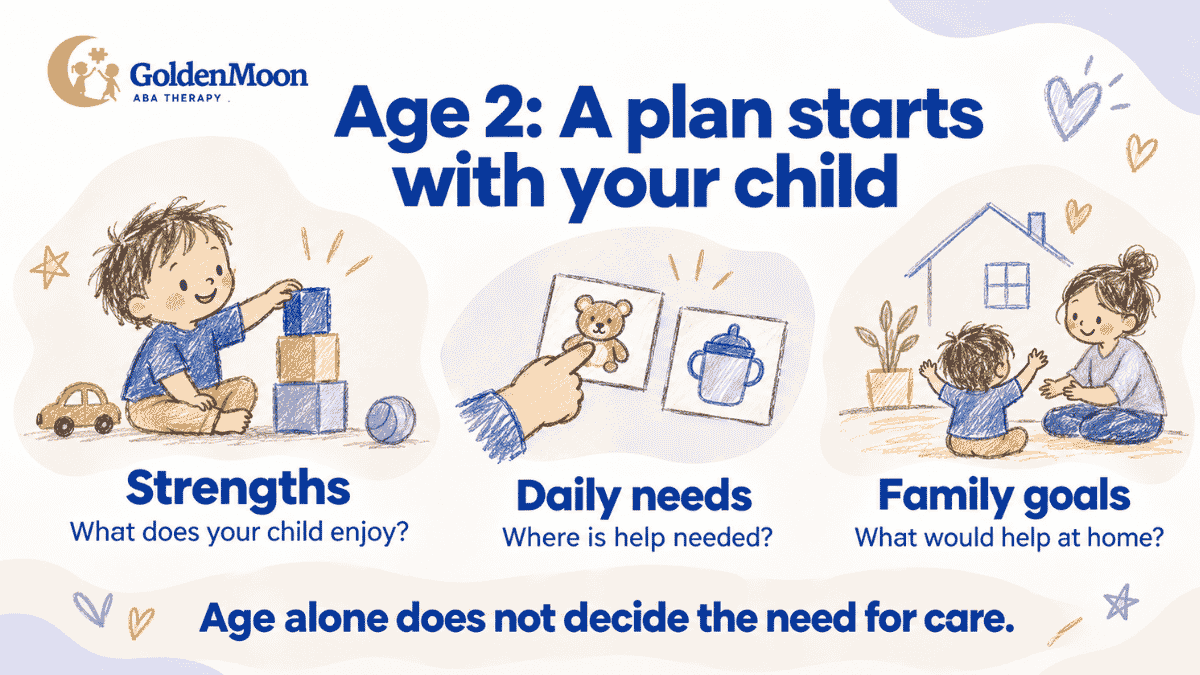
Age two can be an appropriate time to begin ABA when an assessment identifies skills that need support. Research on early autism intervention supports helping young children develop communication, learning, and social skills, though outcomes vary. Children who begin later can also benefit from appropriate support.
A child’s second birthday does not automatically mean ABA is necessary. One toddler may need help asking for assistance; another may need support with play or dressing. The reason for treatment should relate to that child’s life.
At Golden Moon ABA, we provide ABA services beginning at age two. Our Board Certified Behavior Analysts, or BCBAs, develop individual plans around each child’s strengths, interests, and family priorities.
What Should an ABA Assessment Consider at Age 2?
An ABA assessment looks at a toddler’s current skills, strengths, and support needs. A BCBA uses observations and family input to plan behavioral treatment. This assessment does not replace an autism diagnostic evaluation.
A Toddler’s Strengths and Communication
Children communicate in many ways before they can speak in full sentences. A BCBA may observe how the toddler plays, interacts, and expresses needs, including:
- Ways the child asks for help or makes choices.
- Toys, songs, and activities the child enjoys.
- Skills used during meals, dressing, and play.
- Responses to noise, new activities, or discomfort.
For example, a toddler who points to a favorite toy already has a way to communicate. The assessment should recognize that ability and consider what additional support would help.
Family Priorities and Daily Life
Parents know which parts of the day go well and where their child needs assistance. That information helps connect proposed goals to practical needs.
A goal such as “asking for help” needs a specific purpose. For one toddler, it could mean handing a closed toy container to an adult. For another, it could involve using a word or picture.
Families can describe a typical day and share examples from home. These details give the BCBA more context than a skill checklist alone. The discussion should also explain why each proposed goal belongs in behavioral treatment and how it relates to other care.
What Can ABA Therapy Look Like for a 2-Year-Old?
ABA therapy for a two-year-old may involve toys, movement, communication practice, and everyday activities. ABA teaching methods use information about how children learn to teach skills and measure progress. The activities should match the child’s abilities and treatment goals.
Learning Through Play and Routines
Research on autism interventions for children under three describes approaches that involve caregivers and create learning opportunities during daily activities. These findings concern specific treatment models and do not guarantee the same results from every ABA program.
For example, imagine a toddler who wants more water during snack time. The child reaches toward the cup but has trouble making the request understood. A therapist might model a gesture, picture, or word that suits the child’s communication needs.
The purpose is to help the toddler express a need during an activity that already happens at home.
How We Provide Support at Home
With our home-based ABA therapy, Registered Behavior Technicians, or RBTs, provide direct support using plans developed and supervised by a BCBA. Sessions can include familiar toys and routines, giving families opportunities to see how teaching connects to daily life.
Our team comes to the family. Caregivers can discuss how their home environment and toddler’s usual activities could support the proposed goals.
How Much ABA Therapy Does a 2-Year-Old Need?
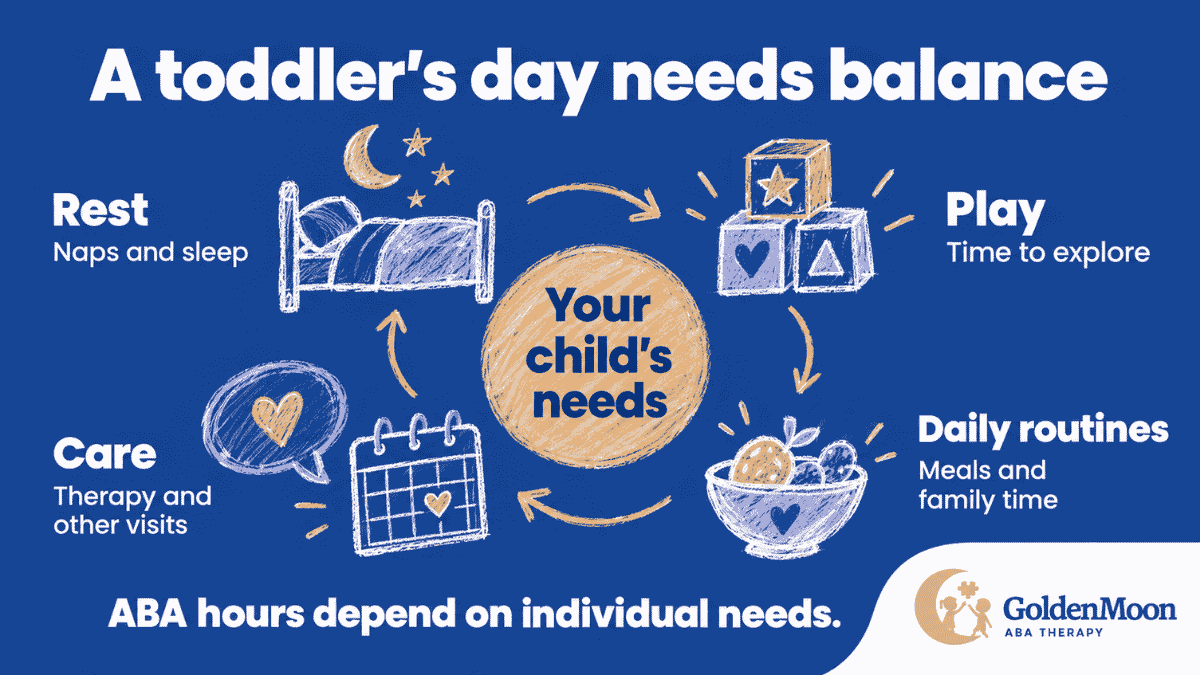
There is no single number of ABA hours that every two-year-old needs. A treatment schedule should reflect individual needs, goals, and the child’s response to care. Autism treatments differ between children, so age alone cannot determine the schedule.
Before accepting a recommendation, families can discuss:
- Treatment goals: Which skills require support and why.
- Rest and play: Time for naps, sleep, free play, and family activities.
- Other care: Speech therapy, occupational therapy, and appointments.
- Session length: How the plan accounts for attention and tiredness.
- Review: How the team will decide whether hours need to change.
A recommendation for more hours deserves an explanation. Parents can ask which goals require that time and what information supports the recommendation.
A weekly calendar can make the discussion easier. Meals, childcare, and existing appointments show the team what the proposed schedule would mean for the toddler’s day. New skills, changing needs, or difficulty taking part can prompt a discussion about adjustments.
Questions to Ask Before Starting ABA at Age 2
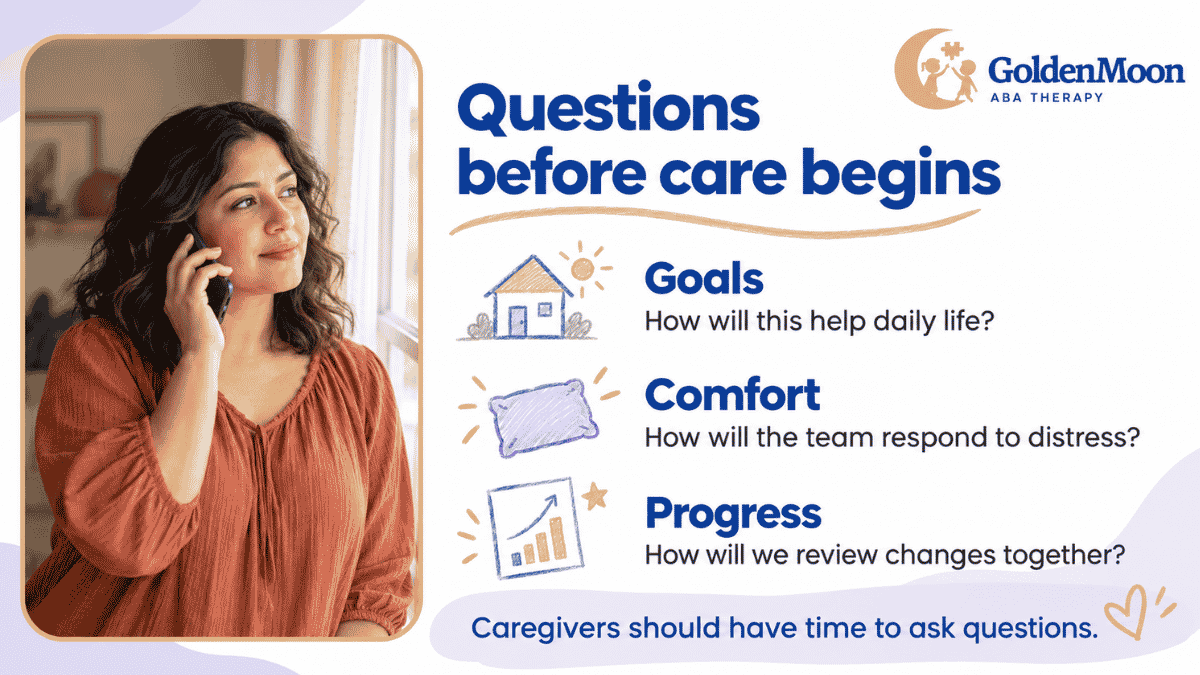
A consultation gives families time to understand the plan and raise concerns. These five questions help turn a general recommendation into a conversation about the child.
1. How Will Each Goal Help My Child?
A treatment goal should have a meaningful purpose beyond completing an activity with a therapist. Parents can ask what the skill will help their toddler do and where they expect the child to use it.
2. How Will the Therapist Respond to Discomfort?
Toddlers may show discomfort by turning away, crying, or moving toward a caregiver. Families can ask how the team recognizes these signals, offers breaks, and changes activities. A child’s comfort and communication deserve attention throughout treatment.
3. What Happens if the Schedule Becomes Too Much?
A proposed schedule needs room for discussion when a child becomes tired or struggles to participate. Parents can ask whom to contact, how concerns will be reviewed, and what adjustments the team can consider.
4. What Support Will Caregivers Receive?
Through our ABA parent training, BCBAs help caregivers understand strategies connected to the child’s plan. A family might learn how to support an agreed communication goal during play. Parents can ask for demonstrations and feedback when a strategy feels unfamiliar.
5. How Will We Review Progress Together?
ABA providers track progress toward individual goals. Families can ask how the BCBA will explain those records and include observations from home. A progress update should explain how much help the child needed, as well as whether the child completed the activity.
FAQs About ABA Therapy for 2-Year-Olds
Can my 2-year-old have ABA and speech therapy at the same time?
Some toddlers receive both services during the same period. Speech and language therapy addresses communication needs, while ABA may support related skills during activities. With family permission, providers can discuss shared goals and how their approaches work together.
Can an autism diagnosis be reliable at age two?
A diagnosis from an experienced professional can be very reliable by age two. An autism screening identifies possible concerns; it does not establish a diagnosis. Families with developmental concerns can discuss evaluation options with their child’s pediatrician.
Will using pictures prevent my toddler from learning to speak?
Picture-based communication does not prevent speech development. Research summarized by the American Speech-Language-Hearing Association supports using additional communication methods with young children. A speech-language pathologist can help identify appropriate supports for a toddler’s needs.
Discuss ABA Therapy Options for Your 2-Year-Old
A toddler’s age is one part of the decision about starting ABA. An assessment, meaningful goals, and a plan that accounts for ordinary childhood activities help families understand what they are considering.
At Golden Moon ABA, we provide BCBA-led services for families throughout Maryland. A free consultation gives parents a chance to discuss concerns, learn about our services, and ask how care could work at their address.