
ABA parent training goals focus on what caregivers learn and practice. For example, when getting dressed is difficult, a parent might learn to show a picture of the next step and recognize when their child needs help.
A Board Certified Behavior Analyst (BCBA) helps families choose goals based on their autistic child’s needs and daily life. One routine can provide a starting point without adding several new tasks to the day.
Key Points:
- ABA parent training goal examples include preparing for activity changes, responding to requests, and supporting bedtime routines.
- Caregiver practice and a child’s participation need separate review because each shows a different part of learning.
- A BCBA helps adjust support when a strategy is hard to use or causes distress.
What Are ABA Parent Training Goals?
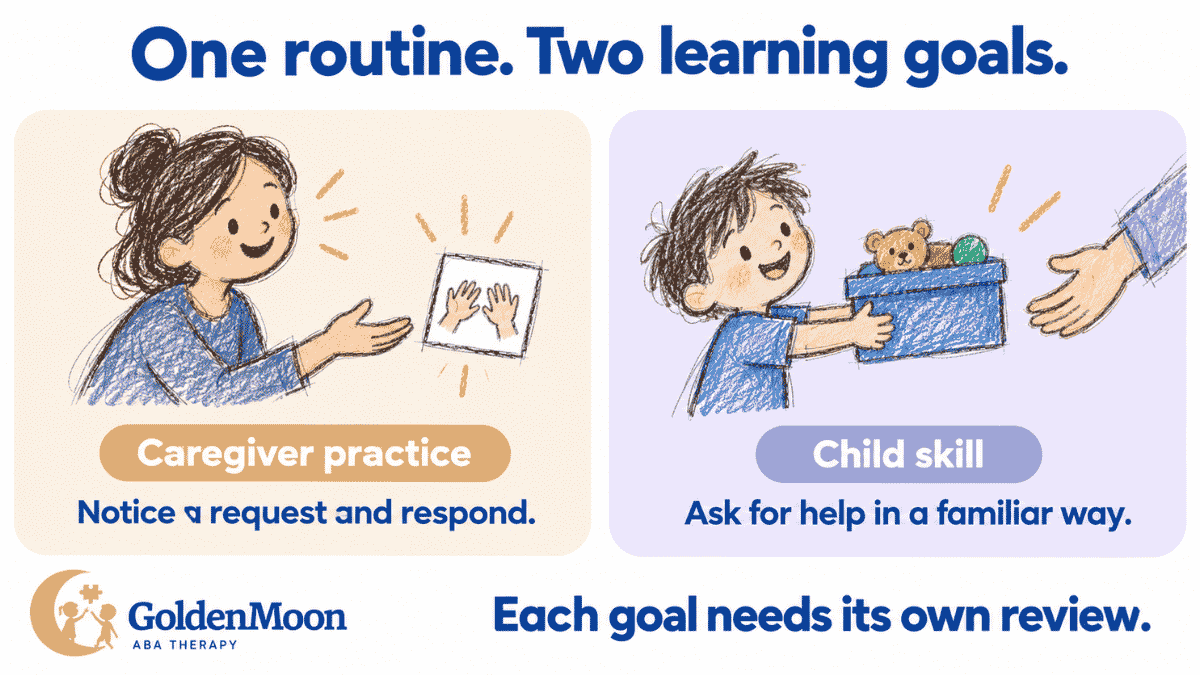
ABA parent training goals describe specific skills adults learn to support their child. A child’s therapy goal describes what the child is learning.
Both goals can involve the same activity. During snack time, a child might practice requesting help opening a container. The caregiver might learn to recognize that request and respond. The adult’s goal concerns their own actions, even when the child still needs support.
At Golden Moon ABA, our parent training covers communication support, routines, prompts, and positive reinforcement. A prompt is help, such as showing a step. Positive reinforcement means a response after a skill makes that skill more likely to happen again. Our BCBAs guide training around each child’s treatment plan.
How Can Families Choose One Parent Training Goal?
Families can begin with one routine they want help with and discuss it with their BCBA. The goal should name something the caregiver can practice during that routine.
A concern such as “Getting ready takes too long” needs more detail before it becomes a learning goal. The BCBA can help explore:
- The difficult part: Does the child need help finding clothes, understanding instructions, or handling an uncomfortable fabric?
- The child’s existing skills: Which steps can the child already do?
- The caregiver’s learning need: Would practice with pictures, instructions, or offering choices help?
- The family’s schedule: When could practice happen without rushing?
Our home-based ABA services include family involvement and coaching during everyday activities. That setting connects learning with the routines families want help with.
ABA Parent Training Goal Examples for Daily Routines
Parent training goals can address asking for help, washing hands, leaving home, and preparing for bed. Each example below names a caregiver action and the related child skill.
These are hypothetical teaching examples. A BCBA and family decide which goals and supports suit the child.
| Daily Routine | Example Caregiver Goal | Related Child Skill |
|---|---|---|
| Play or snack time | Recognize and respond to requests for help through words, gestures, pictures, or a communication device | Expressing a need for help |
| Handwashing | Show the agreed picture steps and offer help when needed | Following parts of the handwashing routine |
| Leaving home | Give advance notice in a way the child understands and respond to requests for more time | Preparing for the next activity and expressing needs |
| Getting ready for bed | Follow an agreed order of evening activities and recognize requests for comfort or help | Taking part in a familiar bedtime routine |
The examples describe actions to learn, without setting a deadline or requiring the same level of independence from every child. The BCBA can explain how to check each caregiver skill during practice.
Handwashing: One Goal From Practice to Review
A child may turn on the faucet but need help remembering what comes next. A possible caregiver goal is learning to introduce pictures showing the handwashing steps.
In this example, practice could involve:
- A discussion of the routine. The caregiver identifies which steps the child knows and where help is needed.
- A demonstration. The BCBA shows how to introduce the pictures and offer support.
- Caregiver practice. The adult tries the strategy during an ordinary handwashing opportunity.
- An observation. The caregiver notices whether the child follows a picture, requests help, or shows discomfort.
- A review. The caregiver and BCBA discuss what to keep or change.
Pictures may not address every difficulty. Water temperature, soap texture, or faucet noise may also need attention. The child’s communication and comfort should guide the discussion.
What Does Practicing a Goal With a BCBA Look Like?
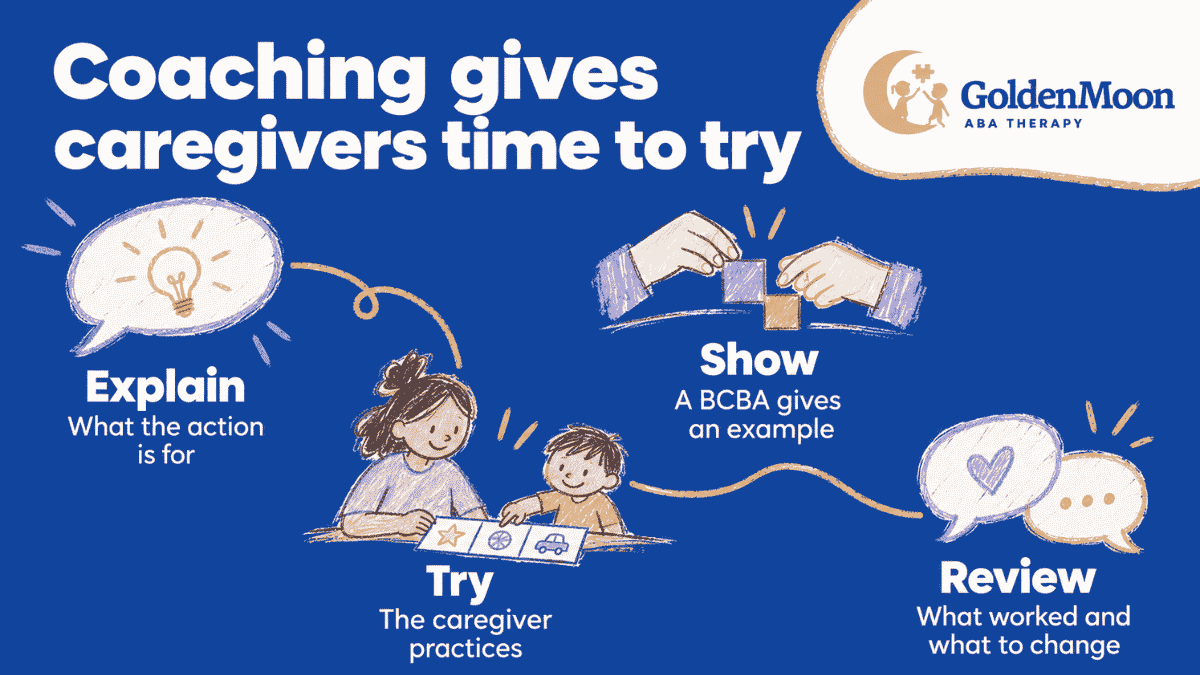
Parent training may include explanations, demonstrations, caregiver practice, and feedback. The caregiver has a chance to try the skill with support.
Coaching may involve:
- Explanation: The BCBA describes the caregiver action and its purpose.
- Demonstration: The BCBA shows an example.
- Practice: The caregiver tries the action, sometimes through role play before using it with their child.
- Feedback: The BCBA explains what worked and what needs another try.
A clinical trial of parent training used instruction, video examples, practice, and role play with feedback. That study tested a specific program; individual sessions vary by provider and family needs.
Our parent training is available on its own or alongside a child’s ABA program. Families can receive support at home or through BCBA-led video sessions. Our explanation of when telehealth ABA may help offers more context for families considering that option.
How Can Caregivers Track and Review a Goal?
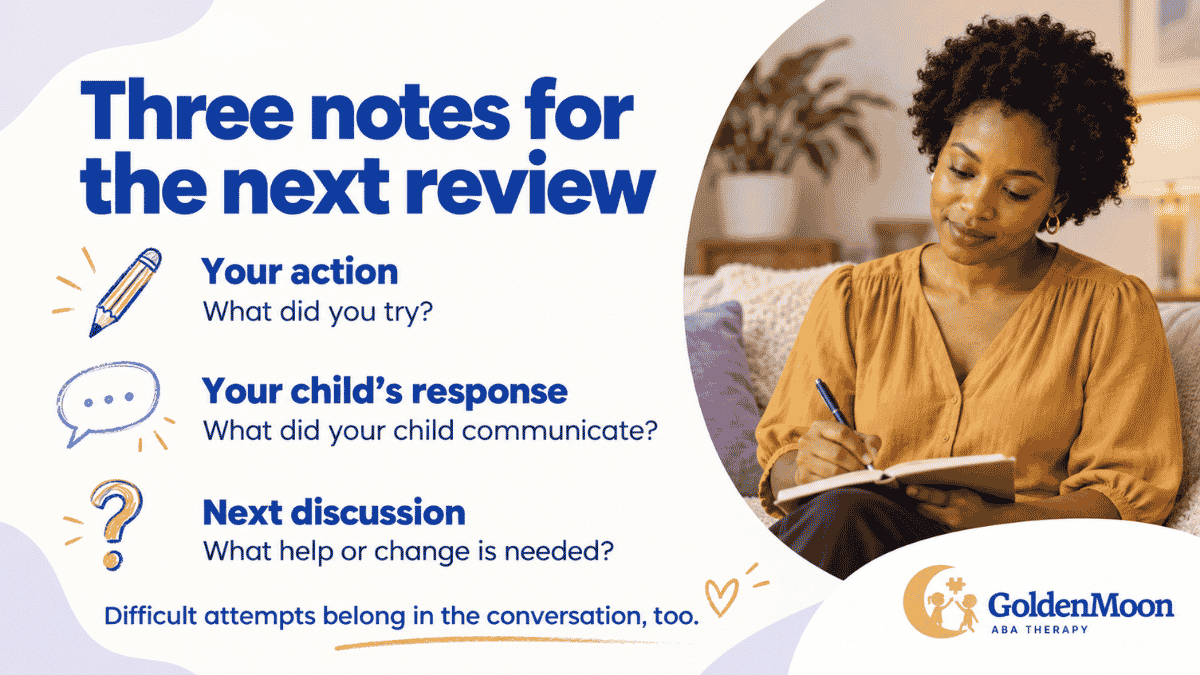
Caregivers can note whether they used the strategy, how their child responded, and what made practice easier or harder. The BCBA can explain which details the treatment plan needs.
A brief observation might look like this hypothetical example:
“Before leaving, I showed the picture of shoes. My child asked for more playtime. I acknowledged the request and gave more time. I want to discuss how much advance notice to offer.”
The note separates the adult’s action from the child’s response. A request for more time can show communication, even when leaving home still takes support.
When Should a Goal Change?
A goal may need adjustment when the strategy is hard to use, the child shows distress, or family priorities change. The review should consider:
- Whether the caregiver needs another demonstration or more practice.
- Whether the child understands the support.
- Whether discomfort, tiredness, or another barrier affects participation.
- Whether the goal still addresses the family’s concern.
A difficult practice attempt gives the BCBA information. The caregiver does not need to hide what went wrong or make every attempt look successful.
FAQs About ABA Parent Training Goals
Can more than one caregiver work on the same goal?
More than one caregiver can learn strategies for the same routine. We encourage primary caregivers to participate when possible. Each person may need practice suited to their role, such as a grandparent helping after school.
Do caregivers need ABA experience before parent training?
Caregivers do not need a background in ABA to participate in our parent training. Our BCBAs teach strategies in everyday language. Questions about unfamiliar terms or instructions belong in the session.
What can families bring to a first goal discussion?
A short description of one difficult routine can help start the conversation. Relevant details include what the child enjoys, what support the family has already tried, and what the caregiver wants to learn. A polished written goal is unnecessary.
Choose One Home Routine to Discuss With Our Team
A parent training goal connects an everyday need with something the caregiver can learn. The child’s participation, communication, and comfort help guide how that goal develops.
At Golden Moon ABA, we offer BCBA-guided parent training for families throughout Maryland. Our team can discuss your priorities and explain the home-based and virtual options available for your family.