
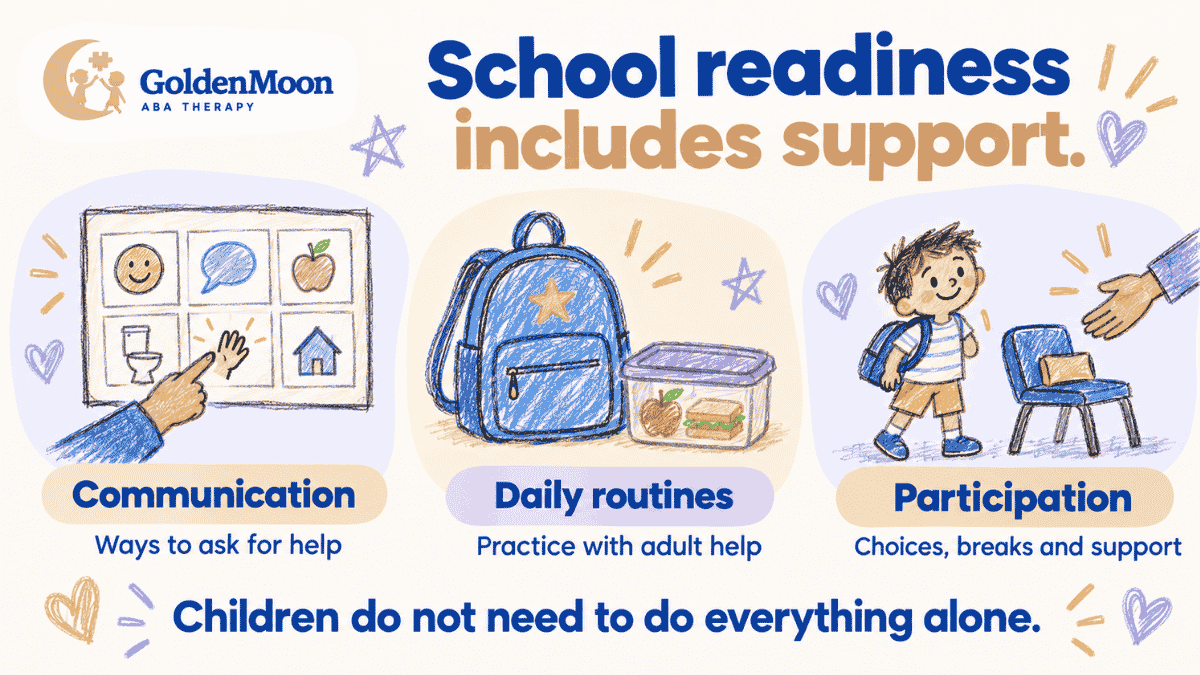
Kindergarten readiness for children with autism includes ways to ask for help, join activities, and manage daily routines with support. A child may still need help opening lunch containers or communicating discomfort when school begins.
Families preparing for Montgomery County Public Schools (MCPS) can practice during meals, play, and morning routines. Preparation also means helping teachers understand your child’s strengths, interests, and needs. Your child does not have to do everything alone before the first day.
Key Points:
- Kindergarten readiness for autistic children involves both developing everyday skills and arranging support from adults.
- Pictures, gestures, speech, and AAC can help children express choices and needs throughout school.
- Families can share specific assistance needs with teachers and use MCPS resources to prepare for enrollment and classroom participation.
What Does Kindergarten Readiness Mean for a Child With Autism?
Kindergarten readiness means developing skills that help a child learn and participate, with adults providing support where needed. These skills extend beyond knowing letters and numbers.
One child might enjoy stories but need bathroom assistance. Another might recognize words but find a crowded classroom uncomfortable. The American Academy of Pediatrics supports schools meeting children at different levels of readiness, including children with autism. Readiness activities help identify support needs; they are not an entrance test.
Communication Skills for Asking for Help and Sharing Needs
Children need a way to communicate choices, discomfort, and requests for assistance. Speech, gestures, signs, pictures, and communication devices can all serve that purpose.
Asking for Help or a Break
Everyday problems create chances to practice communication. When a lunchbox will not open, a child might say “help,” hand it to an adult, or point to a picture. The adult can acknowledge the request and help.
A break request might mean “the room is too loud” or “I need to stop.” Adults can respond to gestures and signs of distress, even when a child cannot make a direct request. Help does not need to wait for a particular word.
Using Pictures or AAC
Augmentative and alternative communication, or AAC, supports communication alongside or instead of speech. Examples include picture boards and devices that speak messages aloud.
A child might select “bathroom” on a device or point to a picture during lunch. AAC belongs throughout the school day, including meals, recess, and classroom activities. Children also need time to form their messages.
Through our home-based ABA services, we work on communication goals within familiar routines. A Board Certified Behavior Analyst (BCBA) develops each child’s treatment plan around their strengths and needs.
Everyday School Routines to Practice at Home
Home practice can stay brief and become part of activities your family already does.
Getting Ready and Changing Activities
A few familiar routines can introduce parts of the school day:
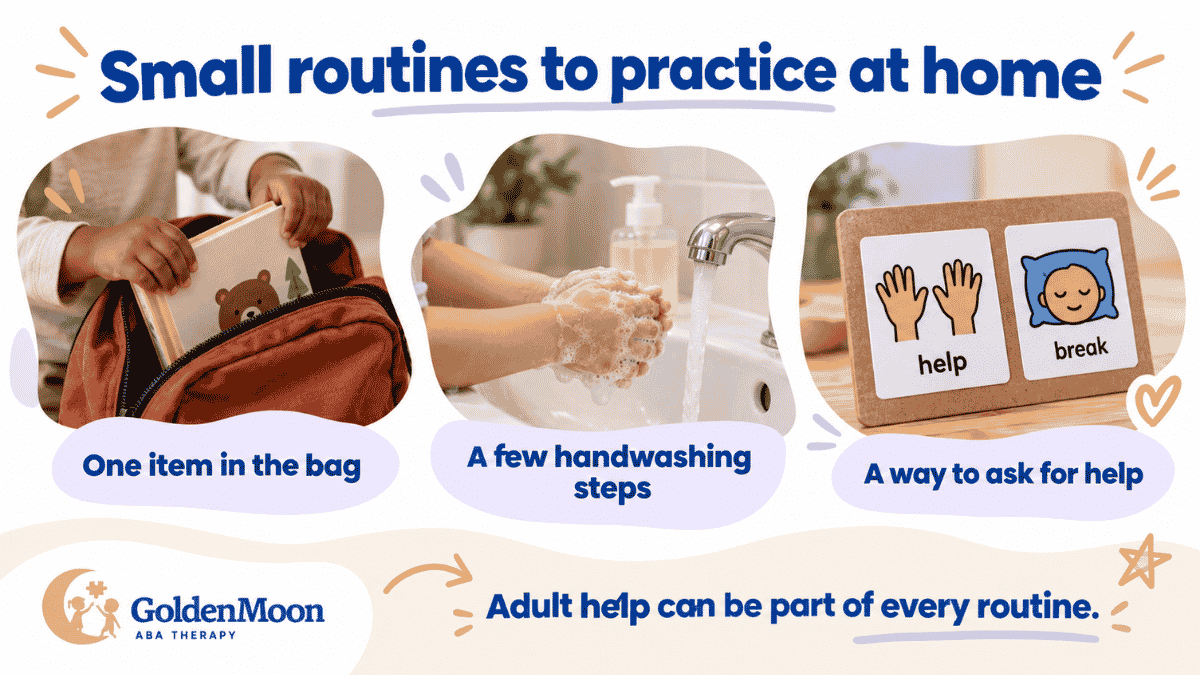
- Packing a backpack: Your child can put one item inside while an adult helps with the rest.
- Following picture reminders: Pictures of breakfast and getting dressed can show what comes next.
- Ending an activity: A reminder before putting toys away can give your child time to prepare.
Your child’s response can help you notice whether pictures, spoken reminders, or more time provide the most help.
Lunch, Handwashing, and Bathroom Needs
Practice can include opening a lunch container, washing hands, or communicating a bathroom need. Adult assistance can remain part of each routine.
For example, handwashing pictures might show water, soap, rinsing, and drying. A child can follow some steps and receive help with others.
Our ABA parent training helps caregivers use strategies connected to their child’s treatment plan. Sessions can address communication and daily routines that families want to work on at home.
Playing and Joining Activities
A short game can offer practice with taking turns and making choices. A caregiver and child might take turns adding blocks to a tower or rolling a toy car.
Participation can also mean playing beside someone or joining part of a song. The activity can follow the child’s interests, with room for movement and breaks.
How Can Adults Support Classroom Participation?
Adults can adjust activities and respond to a child’s communication so participation becomes more manageable.
| School Activity | What the Child May Need | Possible Adult Support |
|---|---|---|
| Morning arrival | Help entering or separating from a caregiver | A familiar greeting and arrival routine |
| Group time | Another way to join or request a break | Pictures, seating choices, or movement |
| Lunch | Help opening food or expressing a choice | Assistance and access to communication tools |
| Changing activities | Time to understand what comes next | Advance reminders or a picture schedule |
| Noisy activities | A way to communicate discomfort | An agreed plan for sensory support or a quieter space |
These are examples to discuss with school staff. Each child’s needs and educational plan help determine appropriate support.
What Should Families Tell Their Child’s Teacher?
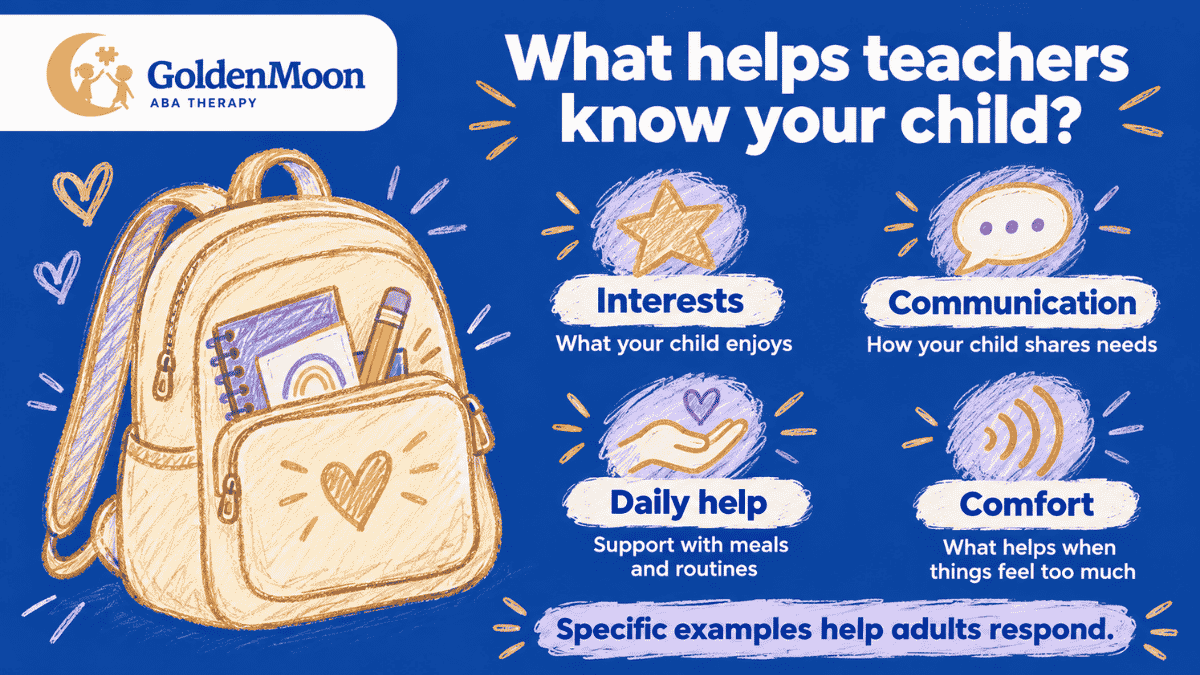
A one-page information sheet can help the teacher understand your child beyond the diagnosis. The most helpful details describe what your child does and how adults can respond.
- Strengths and interests: Favorite books, games, songs, or subjects.
- Communication: Words, gestures, pictures, or AAC your child uses.
- Daily assistance: Help needed with meals, clothing, or bathroom routines.
- Sensory needs: Sounds, lights, or crowds that cause discomfort.
- Helpful responses: Familiar reminders or actions that support your child.
A fictional entry could read, “Sam points to a help card when a container will not open. An adult can acknowledge the card and help with the lid.”
Families whose children receive special education services should also bring their current Individualized Education Program (IEP) when registering with MCPS. An IEP describes a child’s special education services and supports.
MCPS Kindergarten Resources for Families
Three official resources can help Montgomery County families prepare:
- Kindergarten readiness activities: Home activities for language and early reading, available in several languages.
- Kindergarten enrollment information: Standard entry requires children to turn five by September 1 of the entry year. The page also covers registration, documents, and school assignments.
- Elementary special education services: Information about educational support. Families with an existing IEP can discuss the move into kindergarten with their current school team.
How We Support School-Related Goals
At Golden Moon ABA, we serve Montgomery County families, including Germantown and Gaithersburg. Our team connects treatment goals to daily life through home-based ABA, parent training, and school-based support. Families new to treatment can read about how ABA therapy works before discussing individual goals.
Our school-based team works with teachers and school staff when services can take place in the educational setting. School-provided services and outside ABA therapy have different arrangements. Families need to confirm school permission and any insurance requirements before planning outside therapy during school hours.
FAQs About Kindergarten Readiness and Autism
Does my child need to attend preschool before kindergarten?
MCPS does not list preschool attendance among its standard kindergarten registration requirements. A child entering school for the first time can still register when they meet the district’s enrollment requirements.
What happens if my child’s AAC device stops working at school?
A backup communication board can give your child another way to communicate. Families can work with the school’s speech-language pathologist to prepare a familiar paper option and make sure staff know how to use it.
How can I learn about the school day if my child cannot tell me?
A brief home-school update can help. Families and teachers can agree on a few details to share, such as meals, activities enjoyed, discomfort, or assistance needed. A short message or checklist may make regular updates easier.
Explore Support for Your Child’s Kindergarten Goals
Kindergarten preparation can focus on the moments your child encounters each day. A request for help, a familiar routine, or an adjustment from an adult can give your child another way to participate.
Our BCBA-led team can discuss communication and daily routine goals with your family. Through home-based ABA, caregiver training, and school-based services, we provide individualized support. Maryland families can contact us about their child’s needs and discuss options for the setting involved.