
TL;DR
- Telehealth ABA delivers applied behavior analysis over secure video, usually with a behavior analyst coaching a parent who is in the room with the child.
- It tends to work well for parent training, language and play routines, homework and morning routines, and steady follow up between in person visits.
- It is a weaker fit when a child needs hands on prompting, has intense safety behaviors, or cannot stay near a screen for short stretches.
- Most Maryland families use a blend: in person sessions for direct skill building, virtual sessions for coaching, and check ins that would otherwise be lost to traffic or illness.
What telehealth ABA actually involves
Telehealth ABA is not a video of a therapist entertaining your child while you step away. In most programs, the behavior analyst is on screen and you are the hands in the room. The analyst watches a real moment, a snack refusal, a transition away from the tablet, a request your child almost makes, then coaches you through the response in real time. Virtual ABA therapy sessions usually run 45 to 60 minutes.
Federal health agencies describe this model plainly. Virtual visits can support children with developmental delays through a provider who guides caregivers through activities at home, and that guidance is part of why telehealth for young children expanded well beyond the pandemic years. Some sessions are almost entirely coaching. Others mix direct work with your child, songs, matching games, requesting practice, with you nearby to hand over materials.
Video time also covers the quieter work that shapes a plan: reviewing data, adjusting goals, watching a clip you recorded during a hard bedtime. Academic centers use the same approach when they build tele-behavioral health consultation services for families far from a specialty clinic.
Which children tend to do well with virtual sessions
Fit depends less on age than on a few practical questions. Can your child tolerate playing within camera range for five to ten minute stretches? Is there an adult who can be present and hands free? Are the target skills ones that show up at home anyway, like asking for help, waiting for a turn, or getting shoes on before the bus?
Children who respond to a familiar adult, who have some way to communicate, and whose challenging behavior is mild to moderate usually adapt quickly. So do older children working on conversation, flexibility, homework routines, and self management.
Younger children can also do well, though the format looks different: shorter blocks, more movement, and a parent doing most of the prompting. Research groups studying telehealth assessments have found that a great deal can be observed and taught remotely when caregivers are prepared and the goals are chosen with the format in mind.
Where telehealth ABA fits best
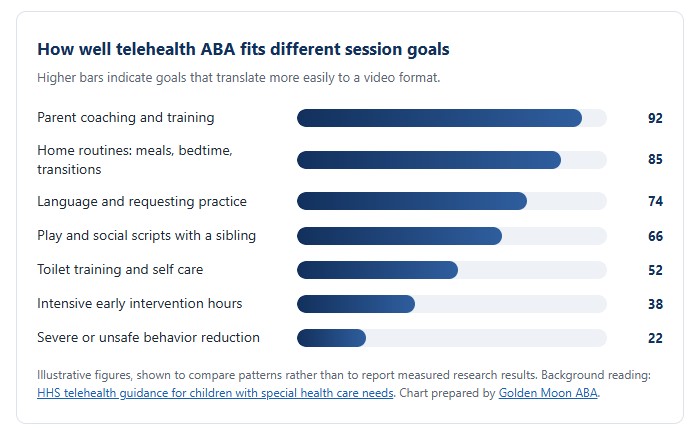
The honest answer is that telehealth is excellent for some goals and mediocre for others. The chart below shows how families and clinicians typically rate fit across common session purposes. Use it as a conversation starter with your team rather than a scorecard.
 Source
Notice the shape of it. Goals that depend on daily routines rank highest, because your home is the natural setting and you are the natural teacher. Goals that depend on physical prompting or fast safety response rank lowest, for the same practical reason.
What you need at home for a session to run smoothly
The technical list is short: a reliable connection, a tablet or laptop you can prop up, and a spot where the camera sees both you and your child. A phone works, though a stand helps, since holding a phone means you cannot use both hands to prompt.
The human list matters more. Pick a consistent time when your child is not hungry or worn out. Gather materials before the call: preferred snacks, two or three toys, whatever your analyst asked for. Plan for siblings. And expect the first sessions to feel awkward; being coached while someone watches is a skill, and it settles quickly.
Government guidance for families of children with special needs suggests preparing your child for the visit the same way you would for any appointment: a simple explanation, a familiar comfort item, and a chance to say hello to the person on screen before the work begins. Our parent training program builds these habits deliberately in the first few weeks.
When in person therapy is the better starting point
Sometimes we recommend beginning in person and adding virtual sessions later. Aggression or self injury that requires a trained adult in the room is the clearest case. So is a home without an available adult during session hours, or without a reliable connection.
Very young children starting an intensive program are another case. High hour early programs need direct teaching a screen cannot deliver. In those cases we usually start with home based ABA and layer in virtual parent coaching once the routine is established.
Blending virtual and in person care in Montgomery County
Most families we work with in Silver Spring, Rockville, and Bethesda land somewhere in the middle. A common pattern: direct sessions at home several days a week, one virtual coaching session, and video for the appointments that traffic or a mild illness would otherwise cancel. Analyst supervision often happens by video too, which means more oversight, not less.
The blend also protects consistency during the parts of the year that disrupt everything else: snow days, school breaks, a sibling home sick. Skills lose ground when therapy stops for three weeks, and a video session beats a gap.
If you are weighing the option, talk it through with your team first. You can read more about our telehealth services or reach out through the contact page with questions about scheduling, insurance, and what a first virtual session looks like. The team at Golden Moon ABA can help you sort out which goals belong on a screen and which belong in the room.
Common questions about ABA telehealth for parents and children in 2026
Does insurance in Maryland cover telehealth ABA?
Many Maryland plans cover ABA delivered by telehealth, though details vary by plan and by service code, and coverage for parent training can differ from direct therapy. Ask your plan whether telehealth ABA is covered, whether prior authorization is required, and whether virtual hours are capped.
How long should a telehealth ABA session be?
Most run 45 to 60 minutes. Younger children often do better with two shorter sessions a week than one long one. The right length is the one your child can sustain.
Do I have to be present the whole time?
Usually yes, at least for younger children, since telehealth ABA is built around caregiver coaching. Some older children work semi independently, with a parent checking in at the start and end.
Can telehealth replace in person ABA entirely?
For some families with focused goals, yes. For children who need intensive early intervention or hands on support for safety behaviors, no. Your analyst should explain which goals fit each format and revisit that split as progress happens.
What if my child will not stay in front of the camera?
That is common at first and workable. Analysts shorten the session, move the camera to where the child already plays, or start with a favorite activity. If a child still leaves after several weeks, that points toward an in person start.