
If your child has recently been diagnosed with autism spectrum disorder (ASD), you’ve probably heard the phrase “ABA therapy” more than a few times. But what does it actually mean? And how do you know if it’s the right path for your family?

This guide breaks it all down in plain language — no jargon, no overwhelm — so you can walk into your first consultation with confidence. At Golden Moon ABA, we believe informed families make the best partners in their child’s progress, and it all starts here.
What Is Applied Behavior Analysis?
Applied Behavior Analysis, or ABA, is a scientific approach to understanding and changing behavior. It’s built on decades of research into how people learn — what motivates them, what reinforces certain actions, and how skills can be broken down into manageable steps.
The Centers for Disease Control and Prevention (CDC) recognizes ABA as one of the most evidence-based treatments available for children with autism. It’s been studied extensively since the 1960s, and today it’s the gold-standard recommendation from pediatric and behavioral health organizations across the country.
In practice, ABA therapy works by:
- Identifying specific skills to build — such as making eye contact, asking for help, or completing a morning routine
- Breaking those skills into small, teachable steps
- Using positive reinforcement to encourage the child each time they make progress
- Collecting data continuously so the therapist can adjust the approach based on what’s actually working
The goal is never to change who your child is. ABA therapy is about helping your child gain the tools they need to communicate, connect, and live as independently as possible.
Who Is ABA Therapy For?
ABA is most commonly used with children who have been diagnosed with autism spectrum disorder, though it can also support children with other developmental differences. It’s effective across a wide range of ages and ability levels — from toddlers who are just beginning to communicate to school-age children who need support in academic and social settings.
According to the National Institute of Child Health and Human Development (NICHD), early intervention is associated with better long-term outcomes for children with ASD. This is one reason why many families begin ABA therapy as early as age two or three — though it’s never too late to start.
Common areas that ABA therapy targets include:
- Language and communication skills
- Social skills and peer interaction
- Daily living skills (dressing, eating, hygiene)
- Reducing behaviors that interfere with learning or safety
- Academic readiness and classroom behavior
What Skills Does ABA Therapy Most Commonly Address?
The chart below shows the most frequently targeted skill domains in ABA therapy programs for children with autism, based on reported clinical focus areas.
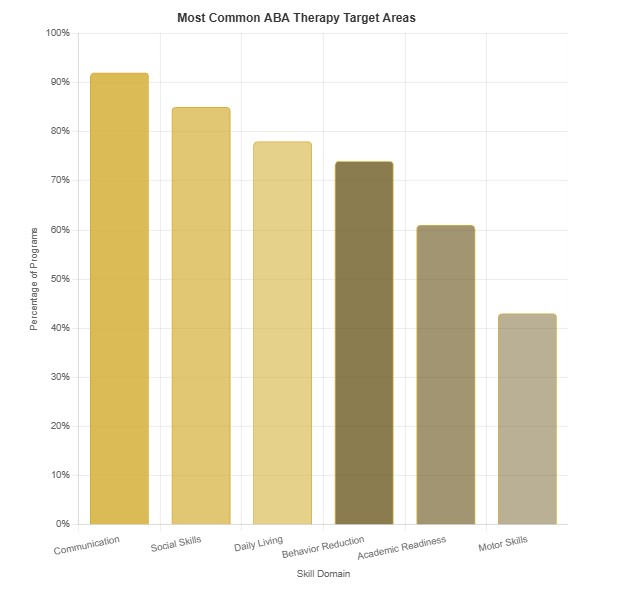
Source: Adapted from peer-reviewed ABA clinical literature. Chart for illustrative purposes.
Who Delivers ABA Therapy?
ABA therapy is delivered by a team, not just one person. Understanding the roles involved helps families know what to expect.
Board Certified Behavior Analyst (BCBA): A BCBA is the licensed professional who designs and oversees your child’s individualized treatment plan. They conduct the initial assessment, set goals, analyze data, and adjust the program over time. BCBAs are required to meet rigorous standards set by the Behavior Analyst Certification Board (BACB).
Registered Behavior Technician (RBT): RBTs are the frontline therapists who work directly with your child during sessions. They implement the plan created by the BCBA, collect data, and build a warm, trusting relationship with your child over time.
At Golden Moon ABA, every child’s plan is designed by a BCBA and brought to life by dedicated RBTs who genuinely care about each child’s progress.
What Does an ABA Session Actually Look Like?
This is one of the most common questions parents ask — and it’s a fair one. ABA sessions don’t look like sitting at a desk doing worksheets. They’re often play-based, naturalistic, and genuinely fun for the child.
A session might include:
- Playing a game that naturally creates opportunities to practice taking turns or making requests
- Working through a short sequence of steps for a skill like washing hands or putting on shoes
- Practicing how to greet someone or respond to their name
- Working on tolerating transitions between activities
Sessions can happen in a variety of settings depending on what’s best for your child. Golden Moon ABA offers home-based ABA therapy, school-based ABA therapy, and telehealth ABA services — so families across Montgomery County can access the right fit.
How Long Until You See Results?
Every child is different, and timelines vary based on age, the intensity of services, the goals being targeted, and how consistently therapy is applied across settings. That said, many families report noticing meaningful changes within the first few months — particularly in communication and day-to-day behavior.
Research consistently shows that more hours of therapy per week and earlier age of onset are both associated with stronger outcomes. A study published through the National Library of Medicine (PubMed) found that children receiving intensive early ABA intervention showed significant gains in IQ, language, and adaptive behavior compared to control groups.
How ABA Therapy Progress Typically Develops Over Time
The graph below illustrates a generalized model of how skill acquisition typically progresses during ABA therapy, showing accelerating growth as foundational skills are established.
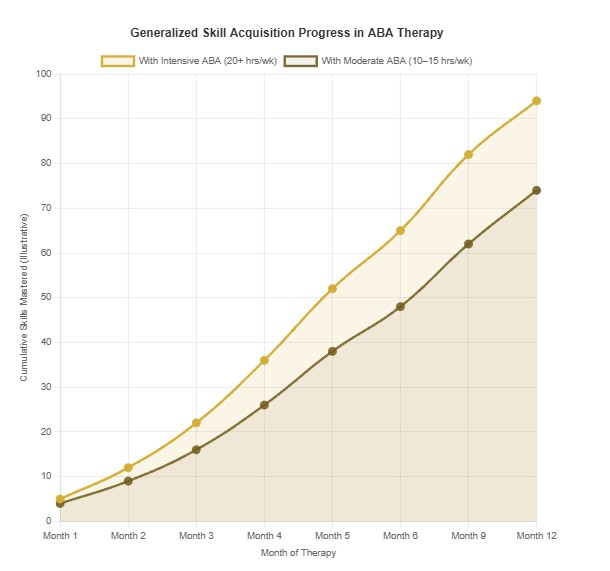
Illustrative model based on general ABA research findings. Individual results vary.
Is ABA Therapy Covered by Insurance in Maryland?
Maryland is one of the states with a strong insurance mandate for autism services. Under Maryland law, most insurance plans are required to cover ABA therapy for children diagnosed with ASD. The Maryland Department of Health provides guidance for families navigating insurance coverage for autism-related services.
At Golden Moon ABA, we’re happy to help families understand their coverage options. Reach out to our team through our contact page and we’ll walk you through the process.
Ready to Learn More about ABA in Maryland?
ABA therapy can be genuinely life-changing, not just for children with autism, but for their entire families. When done well, it builds real skills, reduces daily stress, and opens doors that might otherwise feel closed.
If you’re wondering whether ABA therapy is the right next step for your child, the best thing you can do is have a conversation. Schedule a free consultation with the Golden Moon ABA team in Silver Spring, MD, and let’s talk about where your child is today and where they could go.